
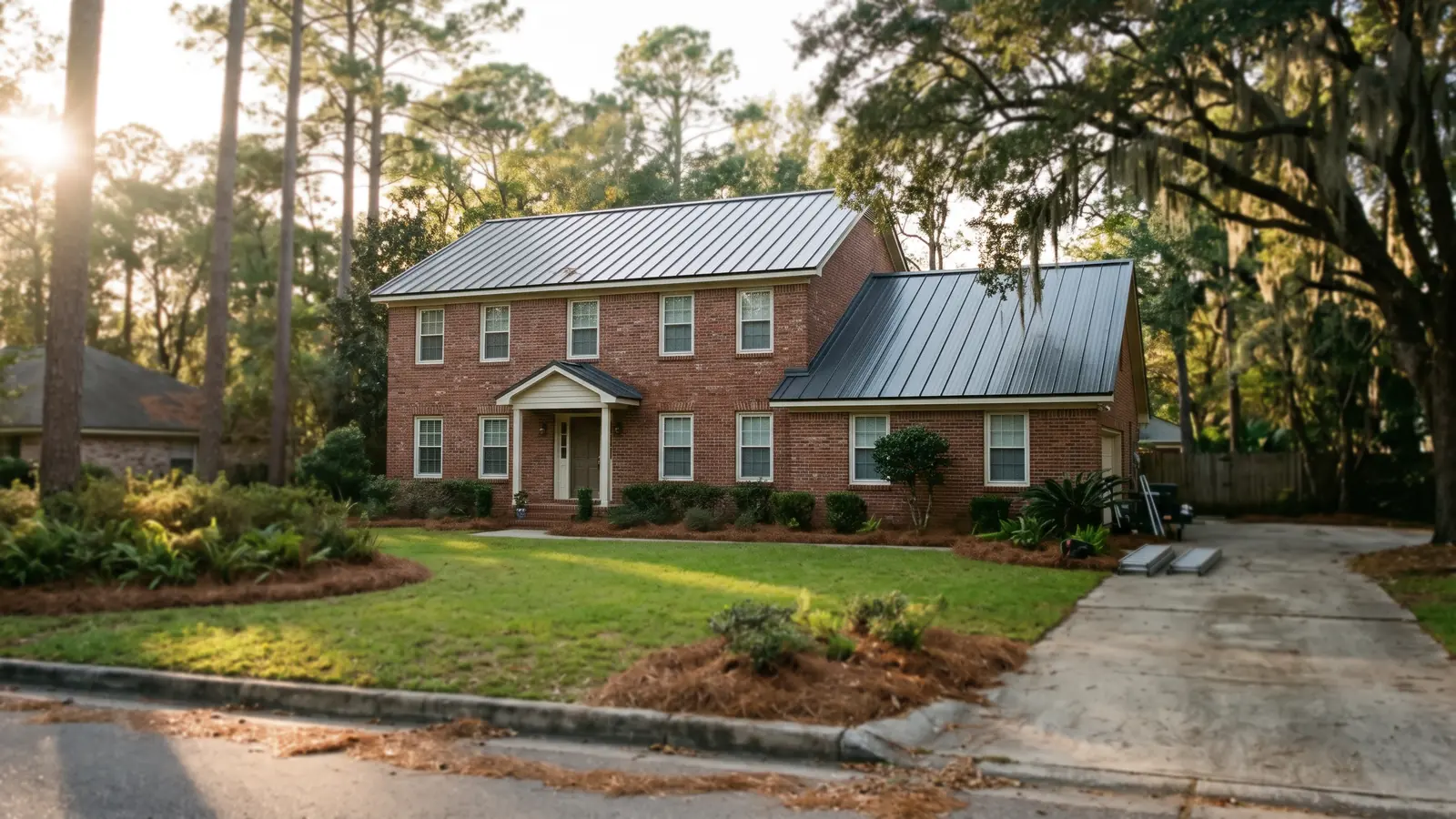
Metal Roof Screw Replacement Options
Panels on a screw-down roof often outlast their fasteners by decades. One supplier gives the panels 40 to 70 years and the screws far less, because sun, heat cycles and panel movement wear them out first. These are the four ways that wear gets fixed.
Oversized Replacement Screws
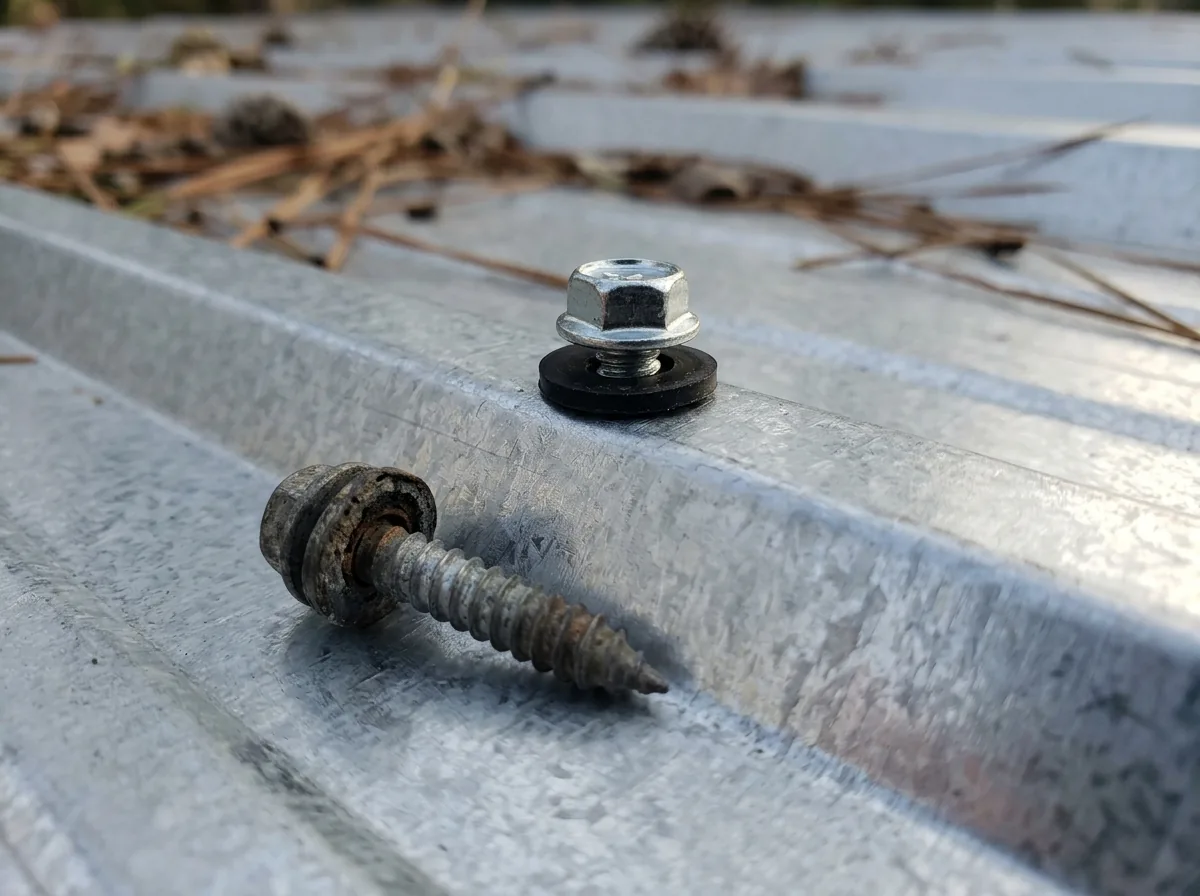
A screw hole that has opened up won't grip a new screw of the same size. The usual fix is a fatter shank that cuts fresh thread in the deck around the old hole. Replacement screws sold for this are often marked "oversized" #14 metal-to-wood fasteners, and a supplier recommends going one size up from whatever comes out.
- Common steps: #10 to #12, #12 to #14, or #14 Type A to #17 Type AB for badly worn wood holes (supplier guidance)
- Works when: the deck under the hole is dry and solid
- Fails when: the wood is rotten or the panel hole has torn into a slot
Screws with EPDM Washers
The washer does the sealing, not the screw. EPDM washers resist UV and ozone better than neoprene and stay flexible from -60°F to 350°F, per one fastener seller. Cracked, flattened or chalky washers are reason enough to replace a screw even if it is still tight. The washer should compress evenly. One that bulges out from under the head has been overdriven, and the seal is already weakened.
Backed-Out Screws on Older Roofs
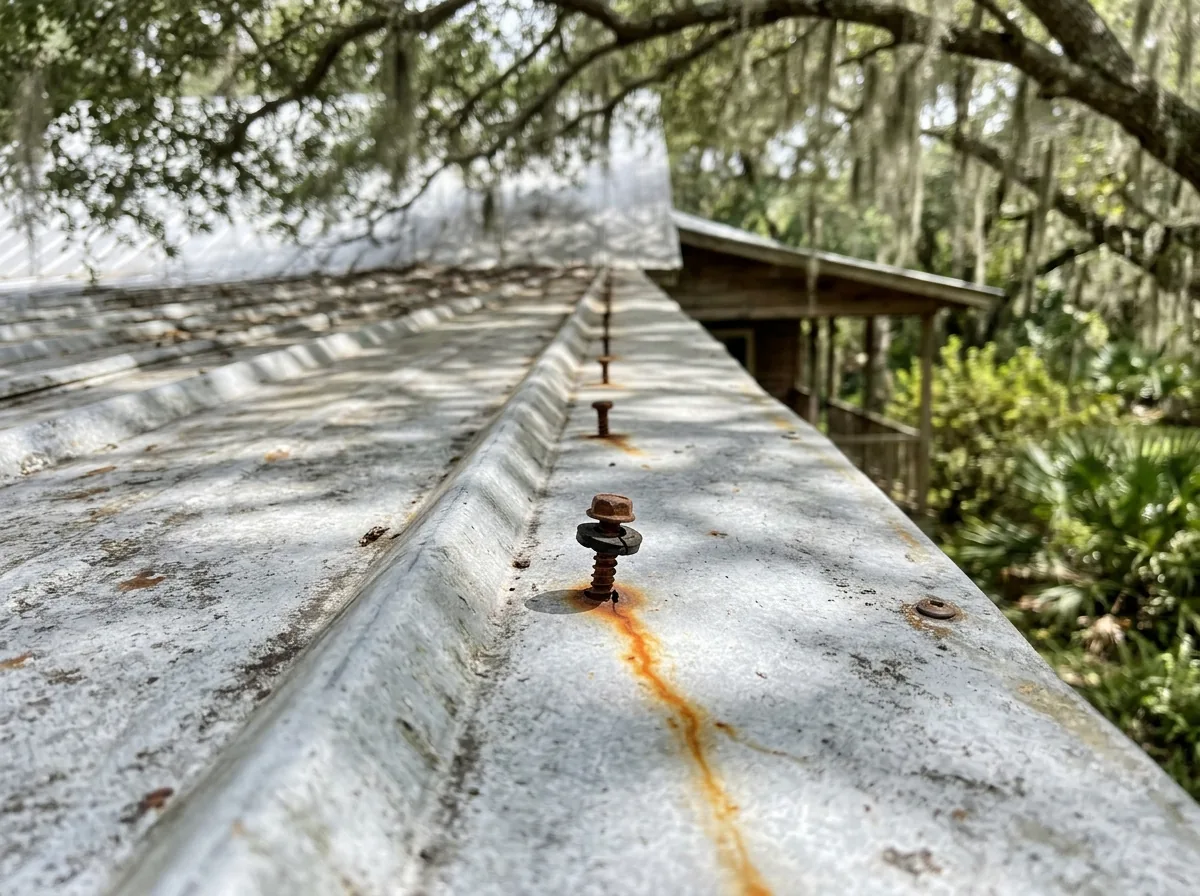
Metal grows in the sun and shrinks at night. One supplier puts the movement at about 0.325 inch across a 100-foot run of panels for a 50°F swing. Every cycle works the screws loose a little, and HomeGuide names thermal expansion and contraction as the reason fasteners back out. With an average daily high of 79.7°F, Tallahassee gives screw-down roofs plenty of those cycles. A screw that sits proud of the rib, with a rust streak running down from it, is the usual sign.
Full Re-Screw vs Spot Repair
Spot repair means replacing the screws that have failed, usually along the ridge, eaves and wherever leaks show inside. A full re-screw replaces every fastener on the roof. The same supplier says that past 20 years most screws are on borrowed time, and very few reach 30.
- Spot repair: suits a newer roof with a handful of leaks
- Full re-screw: suits a roof past the 10 to 15 year mark where washers are cracking everywhere
- Panel replacement: needed where holes are elongated or torn, or the deck below is soft
Large partial jobs can bring code into play: see the 25% rule on metal roof repair.
Why Tallahassee homeowners call Tallahassee Metal Roof Co.
- Free referral, no charge to homeowners
- Your request reaches a single metal roofing contractor, not a list
- Ask for panel, gauge and Product Approval number in writing
- Free, no-obligation estimate from the roofer
Signs Your Metal Roof Screws Need Replacing
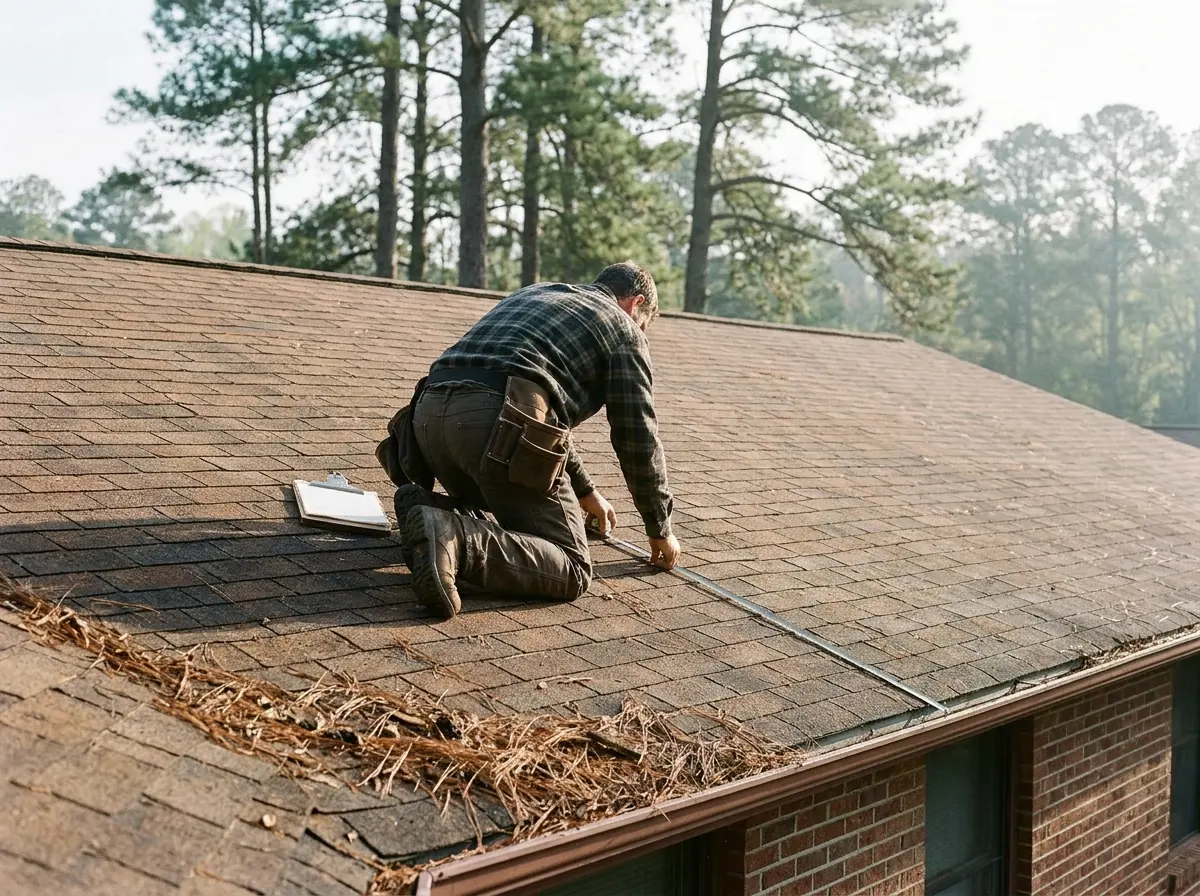
You can check most of this from the ground with binoculars, or from a ladder at the eave. Stay off the panels themselves.
Screws standing proud
Heads that sit above the panel or lean at an angle.Rust trails
Orange streaks running downslope from a screw head.Washer damage
Cracked, flattened, missing or split washers.Spinning screws
A screw that turns without tightening has stripped its hole.Ceiling spots in rows
Stains that line up with the panel ribs or purlins usually trace to a fastener line.
Pine straw and leaves piled against the screws along the eaves hold water on the washers. Under Tallahassee's tree canopy, clearing that debris is part of the job.
What to Ask For on a Screw Replacement Quote
Screw count and size
How many screws, what diameter and length, and whether they go up a size from the originals.Washer type
EPDM, and whether the head is coated or capped against rust.Stripped holes
What happens where a larger screw won't hold: repair plate, new panel or deck repair.Torque
A good roofer will use a screw gun with a clutch and stop when the washer seats, because overdriving crushes the seal.Coating plans
If a coating is coming next, the screws should be done first. See metal roof coating and restoration.
After you call, your details go to the roofer we refer fastener work to, who can set a time to look at the screw lines. Ask for the count and the screw spec in writing before work starts.