
5V Crimp Panel Options in Tallahassee
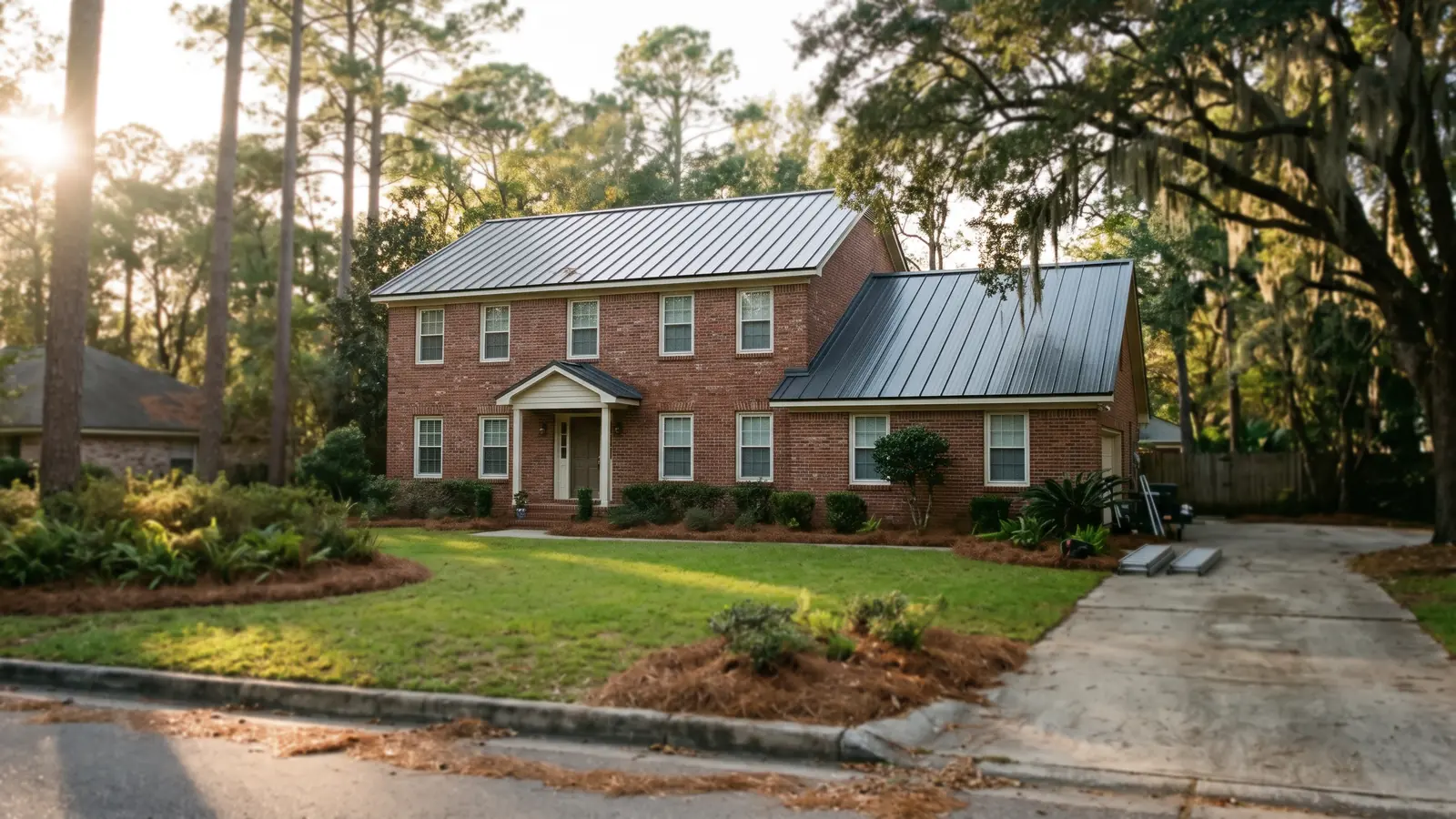
5V is a low-profile panel. Its ribs stand only half an inch tall, so from the yard the roof looks almost flat and the screw rows do the visual work.
5V on Farmhouses and Cottages
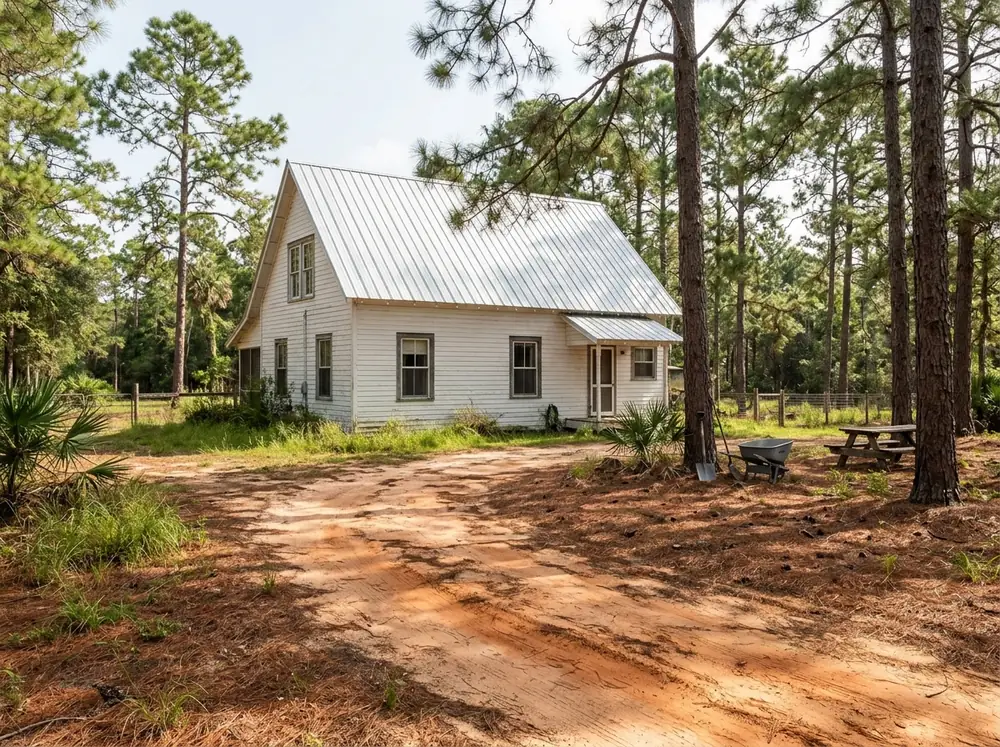
On a main house roof, a single sheet usually runs eave to ridge with no end laps. One maker cuts panels from 5 feet up to 45 feet, another up to 50. Fewer laps means fewer places for water to sit. The look is the classic Southern tin roof, and it suits frame houses with simple gables better than cut-up roofs with lots of hips.
- Coverage: 24 inches per panel
- Rib spacing: major ribs 12 inches on center (one maker)
5V on Porches and Outbuildings
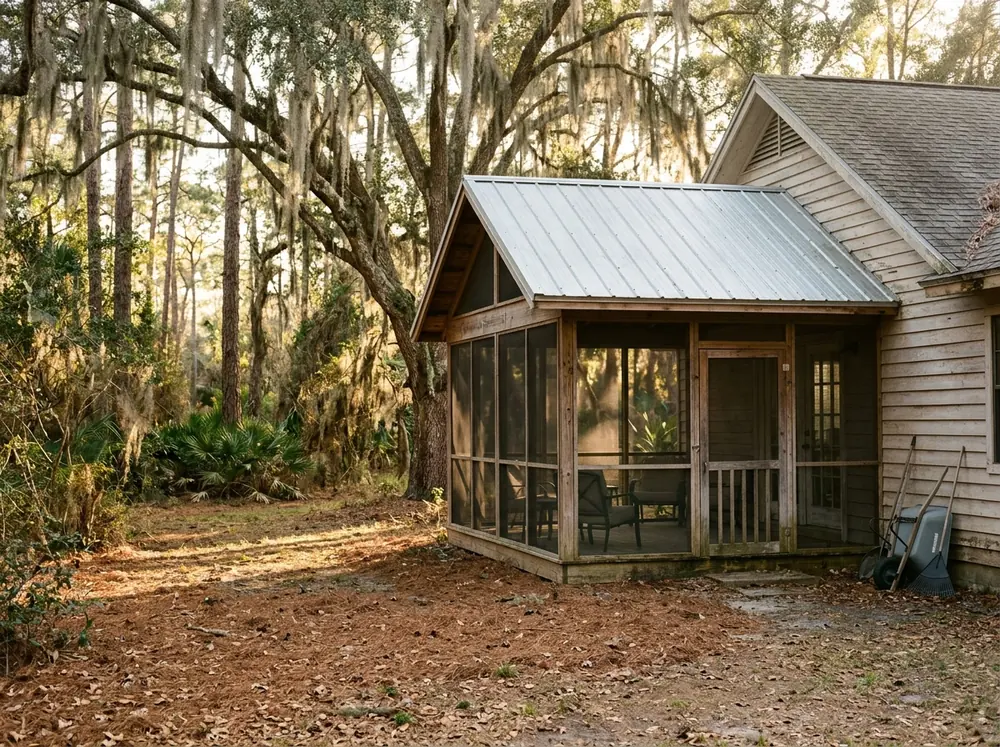
5V is also the usual panel for a front porch on a shingled house, a well house or a small shed. On a porch roof the screw lines are what you'll see from the yard, so ask for straight chalk lines and evenly spaced screws. Watch the pitch: anything under 3 in 12 needs a panel and lap detail rated for it. See metal porch and patio roofs and metal carport, garage and shed roofs.
26 vs 29 Gauge 5V Panels
Gauge is where 5V quotes split. One maker sells 26 gauge as standard with 29 and 24 as options. Another offers 26 gauge in Galvalume but 29 gauge only in bare galvanized. HomeGuide ties 29 gauge to small sheds and barns in mild climates, and 26 or 24 gauge to houses. On a house, ask for 26 gauge in writing. See standing seam metal roofs for the full gauge comparison.
Galvalume vs Painted 5V
Bare 5V is usually Galvalume: steel coated with an aluminum-zinc alloy under ASTM A792. The coating weight is the number to read. AZ50 means 0.50 ounce of coating per square foot, counting both sides, which works out to about 0.8 mil per side. AZ55 carries 0.55 ounce. The Florida Building Code sets AZ50 as the minimum for aluminum-zinc coated steel roofing. HomeGuide notes Galvalume resists corrosion better than plain galvanized steel and is a common pick away from the coast.
Painted 5V adds a color coat over that metal, either acrylic-coated Galvalume or a PVDF (Kynar 500) paint system. For how PVDF and SMP paints compare, see standing seam metal roofs.
Why Tallahassee homeowners call Tallahassee Metal Roof Co.
- Free referral, no charge to homeowners
- Your request reaches a single metal roofing contractor, not a list
- Ask for panel, gauge and Product Approval number in writing
- Free, no-obligation estimate from the roofer
5V Install Details to Ask About
5V is a simple panel, so how it's fastened decides how long it stays dry.
Deck
Plywood or OSB, not open purlins. One panel maker's residential bulletin accepts 7/16 inch OSB or thicker and recommends #14 screws for OSB.Screws, not nails
The same bulletin notes nails tend to back out over the years, while screws seal better and hold against uplift.Side laps
Ask whether the laps get butyl or sealant tape. On a lapped panel it's a small line item.Underlayment
The code allows three methods under metal. Ask which one is in the price.Product approval
One 5V product lists a Florida approval for 26 gauge over 7/16 inch OSB and over 1/2 inch plywood. The permit needs the approval number for the panel you're actually getting.
5V Roofs in Tallahassee: Pine Straw and Screw Upkeep
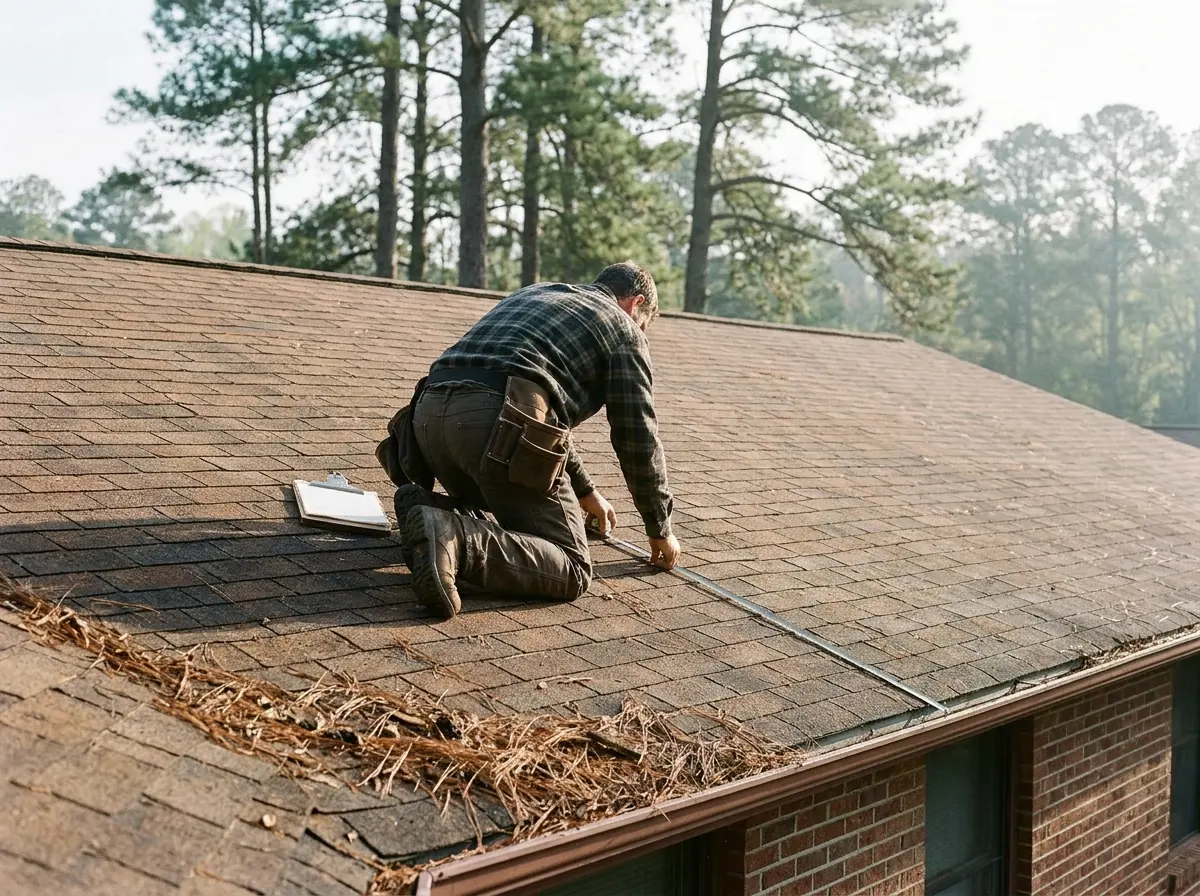
Low ribs are good-looking but slow to shed debris. On a 5V roof under longleaf pines, needles pack against the upslope side of each screw and around pipe boots, and they hold water there. Blowing the roof off a couple of times a year is cheap upkeep, and it lets you look at the screws while you're up there.
The screws are the long-term maintenance item on any 5V roof, and on a roof with hundreds of them, a few will loosen before the rest. See metal roof screw replacement for what a re-screw involves, and R-panel and corrugated metal roofing if you're comparing 5V with a taller-rib panel.